
Weeds growing after hydroseeding do not automatically mean the seed mixture was contaminated or the lawn has failed. Weed seeds already present in the soil often emerge when preparation, watering, and warm surface conditions create a favourable growing environment. The appropriate response depends on whether the intended grass is continuing to establish or losing space, light, and moisture to the weeds, which Jade Blade Hydroseeding explains below.
Weed Growth Does Not Automatically Mean the Hydroseed Contained Weeds
A hydroseeding slurry typically combines the selected grass seed with mulch, fertilizer, water, and tackifier. Weeds appearing after application do not establish that weed seed came from the slurry because the application also creates conditions that encourage seeds already in the soil to germinate.
A fast-growing grass-like plant may also be an intended species in the specified blend rather than a weed. The seed label or supplier documentation can confirm the included species and seed purity. If one unidentified species appears consistently throughout the sprayed area, the seed information and previous site vegetation should be reviewed together rather than treating the growth pattern as proof of contamination.
Where Weeds Can Come From After Hydroseeding
Several seed sources may affect a newly hydroseeded area, particularly where soil was graded, imported, or left exposed before application.
Existing Weed Seeds in the Soil
Soil may contain seeds from previous lawns, unmanaged vegetation, agricultural use, or nearby plants. These seeds can remain dormant below the surface until moisture, temperature, and light support germination. Newly delivered or screened topsoil is not necessarily free of weed seed. Screening removes rocks, roots, and larger debris, but it does not sterilize the soil or eliminate every dormant seed.
Disturbed Soil Exposing Dormant Seeds
Grading, raking, trenching, and other soil preparation can move buried weed seeds into the shallow soil layer where they receive enough light, warmth, and moisture to germinate. Weeds may therefore emerge even when none were visible before the work began.
This is particularly common after construction or significant soil preparation. The disturbance changes the seed’s position in the soil, while hydroseeding and subsequent watering provide the conditions that allow it to grow.
Seeds Introduced From Surrounding Areas
Wind, birds, animals, equipment, footwear, runoff, and landscaping materials can introduce weed seeds after the soil has been prepared. Adjacent fields, vacant land, gardens, ditches, and mature weeds increase the available seed sources.
Growth concentrated along property edges or drainage routes may suggest movement from surrounding areas. However, wind and equipment can distribute seed more broadly, so location should be treated as one clue rather than definitive evidence of its source.
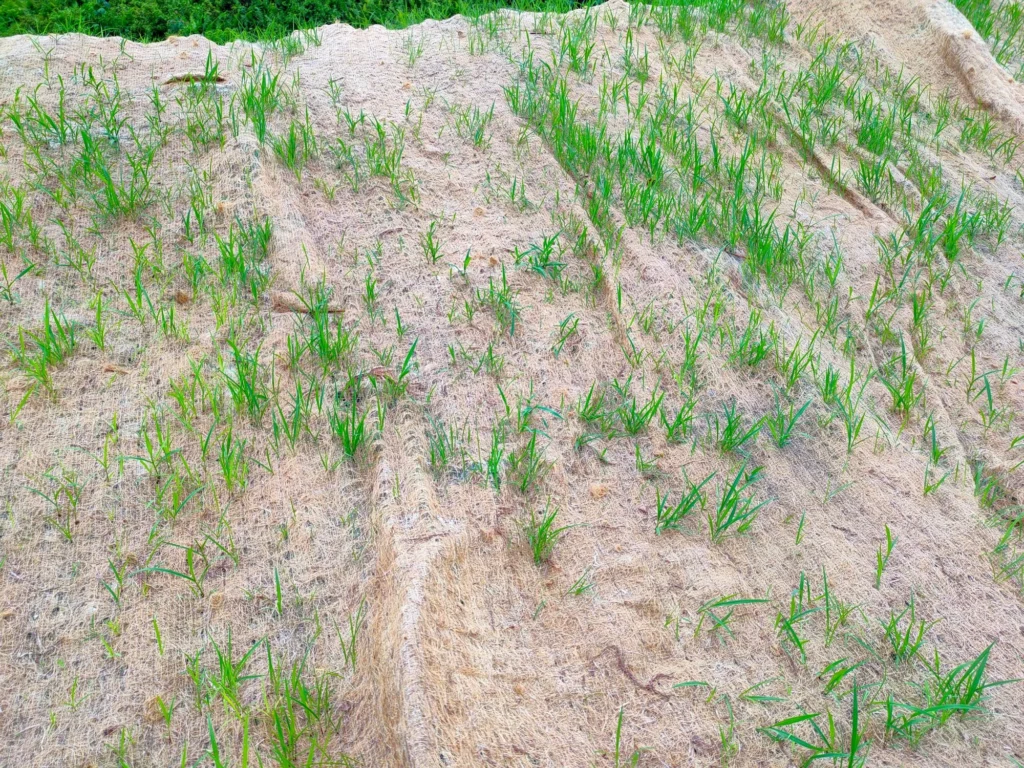
Why Weeds Sometimes Appear Before the New Grass
Plant species do not all germinate at the same rate. Some weeds respond quickly to moisture near the soil surface, while the selected grass may require a longer period or a narrower range of soil temperature and moisture. Perennial weeds may also regrow from established roots, giving them a head start that could not have originated from the hydroseed mixture.
The relevant germination timeline depends on the grass species in the applied blend, soil temperature, moisture consistency, and weather after application. The lawn should therefore be assessed against its seed-specific aftercare guidance rather than a general number of days. Visible weeds are not evidence that watering should be reduced while the intended grass is still germinating.
When Early Weed Growth Is Usually Manageable
Early weeds are generally manageable when they remain scattered, grass seedlings are visible throughout the area, and intended grass coverage continues increasing. Taller weeds may stand above the seedlings without preventing establishment if they are not creating dense shade or occupying most of the available growing space.
There is no universal weed count that separates normal emergence from harmful competition. Distribution, growth habit, and effect on nearby grass matter more than the number of plants. Even limited growth may require identification if the weed spreads aggressively or is regulated as an invasive species in the project area.
Signs Weed Competition May Be Affecting Establishment
Weed growth warrants closer attention when it changes the growing conditions around the new grass. Relevant warning signs include:
- Dense foliage shading substantial areas of young grass
- Mat-forming growth physically covering or crowding seedlings
- Grass remaining thin directly beneath weeds while nearby open areas continue filling in
- Weed growth repeatedly overtaking the grass while intended turf coverage shows little improvement
- Spreading weeds expanding into areas where grass had started to establish
Suppression concentrated beneath or immediately around dense weeds supports competition as a contributing cause. Poor grass development across both weedy and weed-free areas points more strongly toward a broader establishment issue involving moisture, soil conditions, seed displacement, or weather.
Avoid Damaging New Grass While Dealing With Weeds
Newly germinated grass is vulnerable to uprooting, trampling, and chemical injury. Pulling weeds may disturb the surrounding root zone, while products intended for established lawns may harm seedlings or prevent remaining grass seed from germinating.
Do not apply post-emergent or pre-emergent weed control unless the product label specifically permits its use at the lawn’s current establishment stage. Requirements differ by active ingredient and grass species, so treatment should be based on the label and the applied seed blend rather than the size of the weeds alone.
An isolated weed may be removed when it releases without lifting surrounding soil, mulch, or grass seedlings. Otherwise, mowing can limit taller growth once the grass reaches the recommended first-mow height and is rooted firmly enough to tolerate mower traffic. Mowing readiness should be determined by the grass and its aftercare guidance, not by weed height.
When to Reassess the Establishing Lawn
Reassess the lawn when the expected germination period for the applied seed blend has passed and substantial areas still contain little intended grass. Areas corresponding with runoff paths, standing water, dry soil, compaction, displaced mulch, or visible erosion require particular attention.
No visible grass emergence suggests a problem with germination conditions, seed placement, or seed and mulch displaced by irrigation, wind, runoff, or erosion. Grass that emerged and then thinned or died points instead toward stress after germination, including inconsistent moisture, extreme weather, traffic, disease, or unsuitable soil conditions. Identify which pattern occurred before reseeding or addressing the weeds. Weed removal will not correct an establishment problem caused by the site, weather, or aftercare.
Supporting Hydroseeded Lawn Establishment With Jade Blade Hydroseeding
When weeds emerge after an application, record the application date, watering pattern, first signs of grass germination, recent weather, and the areas where weeds or thin coverage appear. Photos taken from the same locations over several days help show whether intended grass coverage is progressing or declining.
For projects completed by Jade Blade Hydroseeding, these details can be reviewed alongside the applied seed blend, site conditions, germination stage, and aftercare requirements. That comparison helps determine whether the lawn needs more establishment time, an adjustment to aftercare, photographic follow-up, or further assessment of the affected area.