

Hydroseeding for large acreage projects in Alberta depends on how scale, terrain, wind exposure, and water access affect establishment outcomes. While hydroseeding is often effective on residential and mid-sized properties, its performance across multi-acre sites changes based on environmental conditions and logistical constraints. Jade Blade Hydroseeding applies hydroseeding across rural properties where conditions support consistent coverage and moisture retention, but not every acreage benefits equally from this method.
How Hydroseeding Scales Across Multi-Acre Properties
Hydroseeding can scale across large properties because it allows for rapid application over uneven or difficult terrain. The spray-based system makes it possible to cover areas that would be inefficient to seed manually or with smaller equipment.
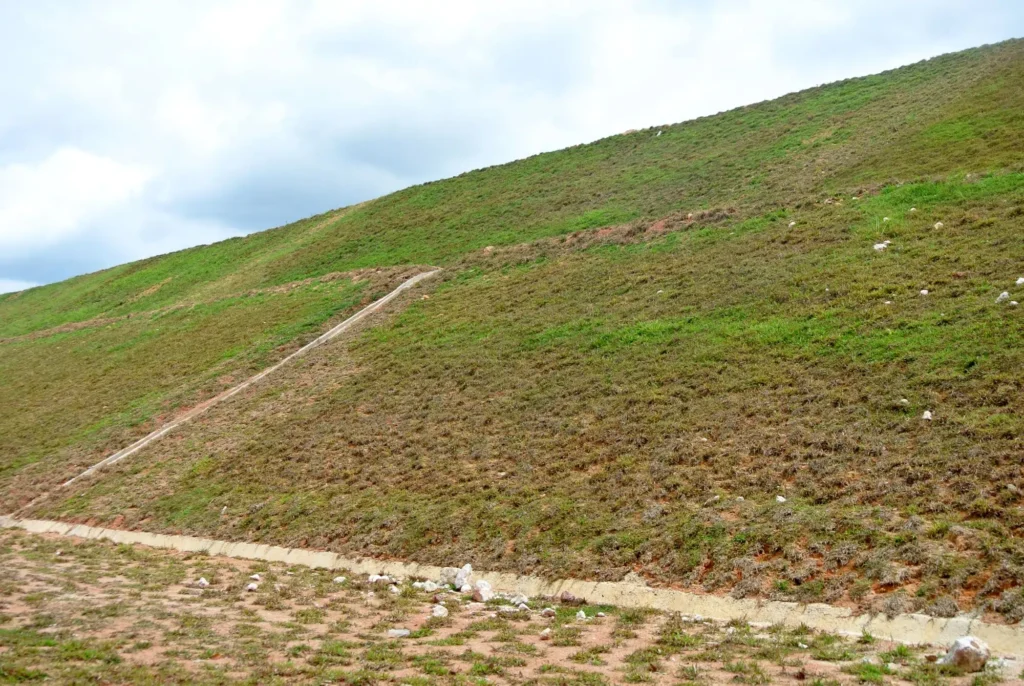
However, scaling introduces variability. On multi-acre sites, maintaining consistent slurry thickness, seed distribution, and moisture retention becomes more difficult, especially when terrain changes across the property. Areas with slope, exposed soil, or wind exposure may establish differently than more protected sections.
The advantage of hydroseeding at scale is coverage flexibility. The limitation is consistency across large, open environments where conditions are not uniform.
Cost Per Acre vs Equipment-Based Seeding Methods
Cost per acre is one of the main decision points for acreage owners. Hydroseeding typically involves higher material and equipment costs compared to broadcast or brillion seeding, especially as total acreage increases.
On smaller sections of land, hydroseeding can be cost-efficient due to reduced labour and faster application. As acreage expands, equipment-based seeding methods often become more cost-effective because they rely on simpler inputs and can operate continuously across large, uniform areas.
The key cost factors include:
- Total acreage and access across the property
- Equipment mobilization and setup requirements
- Seed and material volume
- Risk of reapplication due to uneven establishment
For large rural properties, the financial decision is often based on whether hydroseeding reduces rework or increases predictability enough to justify the higher upfront cost.
Wind Exposure and Soil Stability on Rural Properties
Wind exposure is a major factor in how hydroseeding performs on open acreage. Unlike more sheltered residential areas, rural properties often experience sustained wind that can affect both application and early-stage establishment.
Hydroseeding provides some surface stability through the slurry mixture, which helps reduce seed movement immediately after application. However, on large open properties, consistent wind exposure can still dry out the surface layer or reduce effectiveness if conditions are not favorable during and after application.
Soil stability also plays a role. Loose or dry soil can reduce how well the slurry bonds to the surface, while compacted or properly graded soil improves retention. On acreage sites, variability in soil conditions across the property can lead to uneven results if not accounted for during planning.
Water Access and Irrigation Constraints on Acreages
Water access is one of the most limiting factors for hydroseeding on large acreage properties. The method depends on maintaining consistent moisture levels during early establishment, which becomes more difficult as property size increases.
Unlike smaller residential areas, many rural properties do not have uniform irrigation coverage. This creates challenges in keeping the entire seeded area adequately hydrated during the critical germination period.
When Limited Water Access Changes the Decision
When water access is limited, hydroseeding becomes less predictable. Areas closer to water sources may establish successfully, while more distant sections may struggle due to inconsistent moisture.
Without reliable irrigation, the risk of uneven growth increases, especially on larger properties where manual watering is not practical. In these cases, property owners must consider whether partial success across the acreage meets their expectations or whether a different method provides more consistent results under limited water conditions.
When Brillion Seeding May Be the Better Rural Option
Brillion seeding is often more practical on large acreage properties where terrain is relatively flat and accessible. The method places seed directly into the soil, improving seed-to-soil contact without relying on a surface-applied mixture.
On large rural sites, this approach can provide more consistent results because it is less affected by wind and does not depend on surface bonding. It also allows for continuous seeding across large areas without the same level of material input required for hydroseeding.
Brillion seeding is typically preferred when the property allows for equipment access and when the goal is uniform coverage across open land. It becomes less suitable on steep slopes or highly uneven terrain where equipment cannot maintain consistent contact with the ground.
Decision Framework for Acreage Owners
Choosing between hydroseeding and equipment-based seeding methods on acreage properties requires evaluating how site conditions affect both performance and cost.
- Property size thresholds determine when hydroseeding becomes less efficient compared to equipment-based methods
- Terrain type affects whether spray application or soil contact provides better results
- Water access influences whether hydroseeding can maintain consistent germination across the entire area
- Budget sensitivity determines whether upfront cost or long-term consistency is the priority
For Alberta acreage owners, the decision is not based on which method is better overall, but which method performs more reliably under the specific conditions of the property.
Jade Blade Hydroseeding applies hydroseeding across rural and acreage projects where terrain, moisture conditions, and site access support consistent establishment. On properties where these conditions are not met, alternative seeding methods may provide more predictable outcomes.
Leave a Comment