

Hydroseeding vs broadcast seeding is a common decision point for property owners planning lawn establishment across residential, acreage, and commercial sites in Alberta. Each method performs differently depending on terrain, soil conditions, and property size, especially under Edmonton’s climate. Jade Blade Hydroseeding applies both hydroseeding and broadcast or brillion seeding based on how the site conditions affect coverage, soil contact, and establishment consistency.
How Each Seeding Method Works in Alberta Conditions
Hydroseeding involves applying a slurry mixture of seed, mulch, water, and additives directly onto the soil surface. This mixture is sprayed evenly across the area, creating a bonded layer that helps retain moisture and protect seed during early establishment. In Alberta conditions, this method is often used where wind exposure or surface dryness would otherwise affect seed placement.
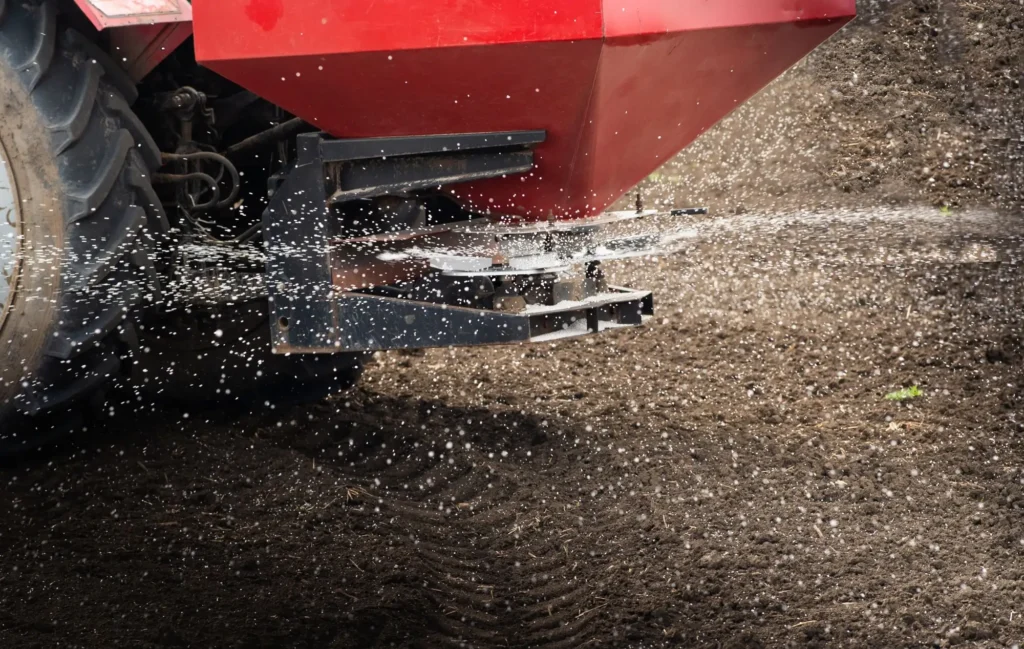
Broadcast seeding distributes dry seed across the soil surface using spreaders or mechanical equipment. Brillion seeding, a more controlled variation, places seed into the soil using rollers that improve seed-to-soil contact. These methods rely more heavily on proper ground preparation to ensure consistent results, especially when using broadcast or brillion seeding.
In Edmonton and surrounding areas, soil conditions, wind exposure, and grading quality influence how well each method performs. Hydroseeding provides surface stability, while broadcast and brillion seeding depend more directly on the quality of the prepared soil.
Performance Differences on Slopes, Large Lots, and Uneven Terrain
Performance differences between hydroseeding and broadcast seeding become more visible on challenging terrain. Slopes, rough grades, and uneven surfaces create conditions where seed movement and coverage consistency vary significantly.
Hydroseeding performs well on slopes because the slurry mixture helps hold seed in place. This reduces washout risk during rainfall and limits movement caused by wind. On uneven terrain, the sprayed application can adapt to surface variation without requiring precise mechanical contact, which is a key advantage of commercial hydroseeding.
Broadcast seeding is more dependent on stable, level ground. On slopes or loose soil, seed can shift before it establishes, leading to uneven growth. Brillion seeding improves this by pressing seed into the soil, but it is best suited for flatter, more uniform areas where equipment can operate consistently.
On large properties, both methods can be effective, but the terrain determines which method maintains even distribution without rework.
Cost Differences by Property Size
Cost differences between hydroseeding and broadcast or brillion seeding are influenced by property size, equipment requirements, and the level of site preparation needed. Hydroseeding typically involves specialized equipment and materials, while broadcast methods rely more on mechanical spreaders and soil preparation.
| Method | Cost | Coverage Speed | Equipment | Ideal Property Type |
| Hydroseeding | Higher per square foot on smaller sites, more efficient at scale | Fast application across large or irregular areas | Hydroseeding tank and spray system | Slopes, uneven terrain, erosion-prone areas |
| Broadcast Seeding | Lower upfront cost, increases with rework if uneven | Moderate, depends on site conditions | Spreaders or basic seeding equipment | Flat residential lawns and open areas |
| Brillion Seeding | Moderate, depends on equipment access | Efficient on large, flat areas | Brillion seeder with soil contact rollers | Large, level properties with prepared soil |
On smaller residential properties, broadcast seeding may appear more cost-effective initially. However, on uneven or sloped sites, the risk of reapplication can offset those savings. Hydroseeding tends to provide more predictable coverage where terrain introduces variability.
Establishment Speed and Growth Consistency
Establishment speed depends on seed-to-soil contact, moisture retention, and environmental exposure. Hydroseeding provides a protective layer that helps retain moisture and reduce early-stage disruption, which can support more consistent germination across the area.
Broadcast seeding can establish at a similar rate when soil preparation is done correctly, but it is more sensitive to external conditions. Wind, surface dryness, and uneven seed distribution can affect how consistently the lawn develops.
Brillion seeding improves consistency by embedding seed into the soil, which can lead to more uniform germination on suitable terrain. However, this consistency depends on even equipment coverage and properly prepared ground.
In Alberta’s climate, where conditions can shift quickly, consistency often becomes a more important factor than raw germination speed.
When Broadcast or Brillion Seeding Is the Better Fit
Broadcast or brillion seeding becomes the better option when the property conditions support strong seed-to-soil contact without requiring additional stabilization. Flat, open areas with well-prepared soil allow these methods to perform efficiently.
Brillion seeding is specifically preferred when large areas need consistent placement and the terrain allows equipment to operate without interruption. It is often used on acreage developments or agricultural-style layouts where uniform coverage is achievable.
Broadcast seeding can also be appropriate for smaller residential spaces where access is simple and the risk of seed movement is low. In these cases, the method can provide acceptable results without the need for more complex application systems.
The key factor is not the method itself, but whether the site conditions support that method without introducing variability.
Choosing the Right Seeding Method for Your Edmonton Property
Choosing between hydroseeding and broadcast seeding depends on how the property’s size, terrain, and soil conditions interact with each method’s limitations. No single method is universally better, but each performs differently under specific conditions.
Hydroseeding is generally more reliable on properties where slope, wind exposure, or uneven grading would affect seed stability. Broadcast and brillion seeding are more effective where the ground is level, well-prepared, and accessible for consistent application.
For Edmonton properties, the decision often comes down to balancing upfront cost with the risk of uneven establishment. A method that appears less expensive initially may require additional work if conditions are not ideal.Jade Blade Hydroseeding applies both hydroseeding and broadcast or brillion seeding based on site-specific factors, ensuring the selected method aligns with how the property will perform during establishment rather than how it appears at installation
Leave a Comment